Eine ganze Woche pures Survival
Der intensivste Naturkurs vor der Ausbildung: fünf Tage draussen, an denen du die wichtigsten Survival- und Bushcraft-Skills wirklich beherrschst. Vom sicheren Feuer über Wasser, Shelter und Orientierung bis zu Notnahrung, Werkzeugen und Mindset. Strukturierter Aufbau, viel Praxis, klare Standards – damit du dich draussen sicher fühlst.
Alle Details
In dieser Woche tauchen wir tief in die Welt von Survival und Bushcraft ein. Du lernst zentrale Kernfertigkeiten Schritt für Schritt und setzt sie direkt in die Praxis um – inklusive Übernachtung im selbstgebauten Shelter.
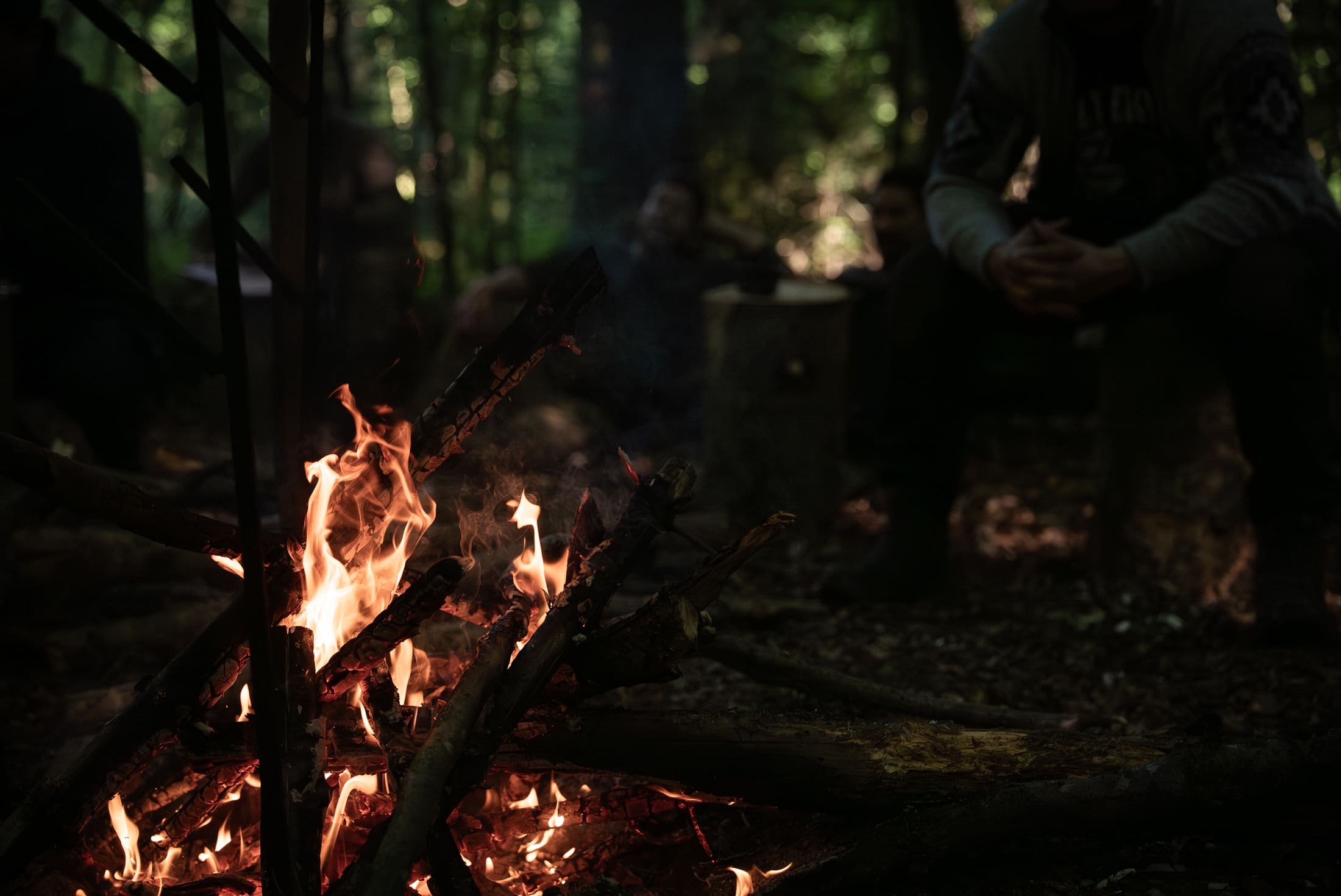
Du arbeitest mit natürlichen Materialien, lernst Risiken realistisch einzuschätzen und entwickelst Routinen, die sich in der Wildnis bewähren. Gemeinsam üben wir effiziente Feuertechniken (auch bei Nässe), die Beschaffung und Aufbereitung von Trinkwasser, den Bau stabiler Notunterkünfte sowie Orientierung mit natürlichen Hilfsmitteln.
Ergänzt wird das Training durch Werkzeugkunde, Knotentechniken, improvisierte Lösungen und einfache Zubereitungen von Nahrung aus Wildpflanzen. Ein besonderer Fokus liegt auf dem richtigen Mindset: Prioritäten setzen, ruhig bleiben und im Team bewusst handeln.
Der Kurs ist auch für Einsteiger geeignet.
- Feuer: Zunderwahl, Feuerstahl, Bau von Feuerstellen, Sicherheit bei Nässe/Wind
- Shelter: Notunterkunft mit und ohne Tarp, Standortwahl, Isolation, Nächte im Camp
- Wasser: Finden, Beurteilen, trinkbar machen; Tragesysteme und Hygiene
- Nahrung: essbare Wildpflanzen, einfache Zubereitungen, realistische Notnahrung
- Orientierung: Natürliche Orientierung, einfache Routenplanung
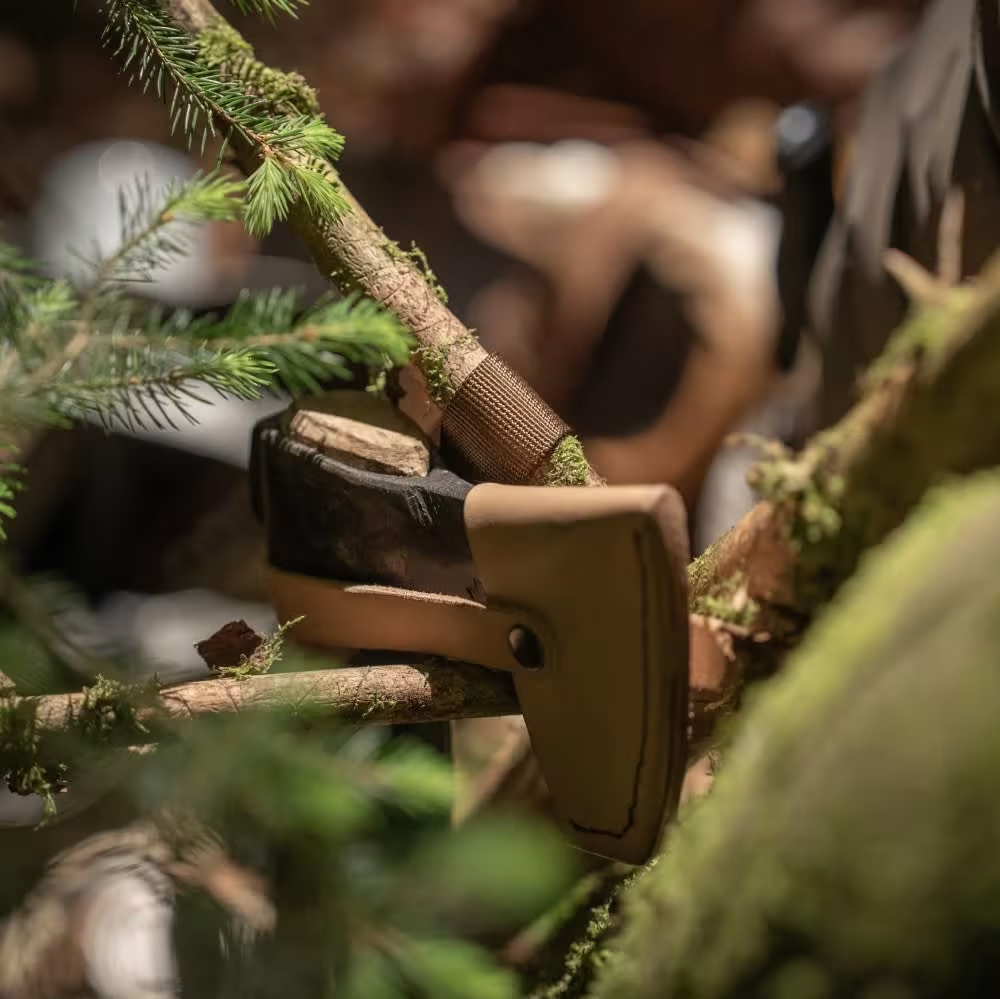
- Werkzeuge & Bushcraft: Messerkunde, sichere Arbeitstechniken, Knoten, Schnüre/Behältnisse
- Notfall & Vorsorge: Signale, Basis-Erste-Hilfe-Gedanken, Risiko- & Wettermanagement, Minimal-Ausrüstung
- Mindset & Teamwork: Prioritäten, Energiehaushalt, Aufgabenverteilung, sauberes Camp-Handling
- Rucksack, wetterfeste Outdoor-Kleidung & robuste Schuhe
- Schlafsack & Isomatte (ggf. Tarp/Biwaksack, wenn vorhanden)
- Stirnlampe, Trinkflasche
- Outdoormesser, ggf. Feuerstahl
- Persönliche Verpflegung gemäss Info, Hygieneartikel & persönliche Medikation
- Notizbuch & Stift; optional Handschuhe/Mückenschutz
Falls Du noch Outdoor Equipment benötigst, kanns Du beim ScandinavianOutdoorshop in Bachenbülach bei Max einkaufen.
5 Tage (Mo–Fr)
Start: Montag- 10 Uhr
Ende: Freitag - ca. 12 Uhr
Keine Daten geplant für 2027
Die Kurse finden im Kanton Zürich statt. Der genaue Treffpunkt wird eine Woche vor Kursbeginn bekannt gegeben. Alle potenziellen Camp-Standorte findest du hier im Überblick.
für Anfänger und Fortgeschrittene geeignet. Ab 16 Jahre.
(Jüngere Teilnehmer dürfen gerne in Begleitung einer Aufsichtsperson teilnehmen.)
- Geführte Trainingswoche mit Tagesmodulen & Camp-Praxis
- Anleitung, Sicherheitskonzept, Qualitätsstandards & Feedback
- Wissen das Dein Leben retten kann
- Übernachtung im selbstgebauten Shelter
CHF 920.- pro Person


FAQ
Hier findest du Antworten auf die häufigsten Fragen zu meinen Angeboten und Methoden.
Because our modern world is vulnerable. Power outages, natural disasters, or supply bottlenecks can occur at any time — usually completely unexpectedly. Those who are prepared remain able to act, protect themselves and their family and remain calm and confident even in extreme situations. Wilderness, survival and precautionary knowledge is not scaremongering, but lived personal responsibility.
Clearly: for everyone. Women are just as welcome as men to our courses, and much of the content is also ideal for families with children. Nature has no target group — it challenges us all in its own way and gives us the same experiences.
Bushcraft means living with and in nature — often over a longer period of time and with simple means. Survival focuses on surviving in emergency situations using as little equipment as possible. Crisis preparedness, in turn, can be transferred to everyday life — for example in the event of blackouts or supply shortages. In our training courses, we combine all three areas into a holistic approach.
More than you'd think. You not only learn how to light fires or build emergency shelters — you also develop mental strength, decision-making skills, improvisation skills and deep confidence in your own abilities. Many participants report that they act more calmly and clearly in everyday life after the course.
Yes, definitely. Survival starts right where it gets uncomfortable. Rain, wind or cold are part of the reality — that's exactly what we train for. Of course, we always pay attention to safety and adapt the course flexibly to the conditions.
We value authenticity, experience, and depth. We're not about action or show, but about real, applicable skills that strengthen you in the long term. Our content is based on over 12 years of practice combined with a holistic view of people, nature and society.
Absolutely. Many principles, such as resource management, clear communication, stress management or improvised action, can be transferred directly into everyday life — even in the middle of the city. And especially in the area of crisis preparedness, this knowledge is extremely valuable, no matter where you live.
Yes, you will not only learn how to identify and collect, but also the traditional uses: Which plant can help with which complaints, in the respective special courses, also how to make tinctures, ointments and teas — with practical examples from experiential medicine.
Collecting and using wild plants requires knowledge and practice. In the respective courses, you will learn step by step how to safely identify edible and healing plants — and how to reliably identify and avoid poisonous plants. Safety always comes first.
No Most of our offers are deliberately structured in such a way that even beginners can easily join in. You don't need top physical performance — just curiosity, openness and the willingness to try out new experiences.
Swiss Survival Training
Kunden Stimmen die für sich sprechen
Ich lebe, was ich lehre – mit jeder Faser meines Körpers.
Doch vertraue nicht nur meinen Worten: Lass dich inspirieren von den Erfahrungen meiner Kunden!
Gion hat eine unglaubliche Erfahrung
Eine wunderbare Erfahrung in der Natur & ich konnte sehr viele hilfreiche Survival Skills von Gion lernen. Gion hat eine unglaubliche Erfahrung und bringt einem realistische und anwendbare Überlebenstechniken bei. Der Kurs war fantastisch, Danke vielmal für die einzigartige Erfahrung 🙏🏻
L&L Kitchen

Ich werde sicher nochmals ein Training buchen!
Absolut Geniales Survival Training. Sehr kompetente durchführung. Gion ging gerne und ausführlich auf meine Fragen ein. Ich werde sicher nochmals ein zusätzliches Training buchen um meine Skills noch mehr zu vertiefen. Herzlichen Dank nochmals für die unvergesslichen Momente.
Roger G.

Eine Reise zum existentiellen!
Top Kurs! es ist nicht nur eine Reise raus aus dem Alltag, es ist eine reise zum existentiellen! Die Natur tut so gut. Dank Gion habe ich gelernt im Einklang mit der Natur zu sein und sie ein wenig zu beherrschen. Spannende Inhalte und top Führung durch ein bereicherndes Wochenende im Wald. Danke Gion, weiter so!
Martina S.

Danke für deine geniale Art Wisse zu vermitteln
Danke Gion für deine geniale Art dein Wissen weiter zu geben. Ich komme sehr gerne in deine Kurse und profitiere jedesmal aufs neue. Mach weiter so!
S. J

Boah, das ist das geilste Geschenk, das ich seit langem erhalten habe!
Ich wusste erst gar nicht, was mich erwartet, aber dieser Kurs hat mich komplett abgeholt. Feuer machen, Notnahrung finden, draußen schlafen – es war intensiv, echt und einfach nur genial. Ich hätte nie gedacht, wie viel man über sich selbst lernen kann, wenn man für ein Wochenende komplett in der Natur lebt. Tausend Dank an meine Schwester für dieses Erlebnis – ich werde noch lange davon erzählen!
Simon B.

Deine Kurse gehören zur Allgemeinbildung!
Professionell, bereichernd, und superspannend. Danke Gion 🙏🏼 Deine Kurse gehören einfach zur Allgemeinbildung!
Aditiyoga Zürichsee

Die Erfahrung ist nicht zu übertreffen!
Die Erfahrung an diesem Wochenende ist nicht zu übertreffen. Gion ist spührbar verbunden mit der Natur und gibt es mit einer sehr sympathischen Art an seine Mitmenschen weiter. Vielen Dank
Andrea P.

Ein richtig guter Lehrer
Gion liefert Erfahrung, Humor und Wissen über Survival und Bushcraft, daneben ist er auch noch ein guter Lehrer. Absolut empfehlenswert.
Ailurus F.

Sehr kompetenter und emphatischer Trainer
Sehr kompetenter und empatischer Trainer und Guide. Für uns erlebten wir wichtige Erfahrungen fürs Leben und Überleben im kleinen und im grossen Ganzen. Wir sind sehr dankbar!!
Peggy P.

Bodenständig, ehrlich und kompetent
Top Survival Kurse! Bodenständig , ehrlich und kompetent.
Pi i.

Das Survival Weekend, kann ich wärmstens empfehlen!
Das Survival Weekend kann ich Menschen die mehr über Natur, Skills die hilfreich sind im Ernstfall zu überleben oder auch mehr über sich selber lernen möchten, nur wärmstens empfehlen. Gion bringt ein riesiges Fachwissen mit, so praktisch angeleitet zu lernen bereitet einfach Freude.
Sarah S.

Deine Kurse sind gold wert für viele Leute
Lieber Gion, ich selber war noch in keinem Deiner Kurse. Mein Sohn, welcher eine Beeinträchtigung hat, war schon in zweien und hat sich gerade für den dritten angemeldet. Er lernt sehr viel von Dir und fühlt sich auch gut aufgehoben und sicher in Deiner Gegenwart. Vielen Dank für alles. Deine Kurse sind gold wert für viele Leute. Gerade mein Sohn hat dadurch auch Perspektiven für die Zukunft gewonnen. Liebe Grüsse
Barbara G.

Mein Partner war richtig begeistert!
Ich war mir erst unsicher, ob ein Survival-Kurs das richtige Geschenk ist – aber er war komplett begeistert. Schon nach dem ersten Abend hat er mir geschrieben, wie krass das Erlebnis ist und was er alles lernt. Seitdem redet er ständig vom Feuer machen, essbaren Pflanzen und wie viel Spaß er mit der Gruppe hatte. Für mich war’s das perfekte Geschenk – weil ich weiß, dass es ihn wirklich berührt hat.
Anja L.
Ich bin begeistert!
Ich war ein Tag mit Gion im Wald und bin begeistert! Ich liebe seine Kompetenz und seine offene, zugewandte Art der Kommunikation. Viel gelernt, viel gelacht und gute Gespräche geführt. Danke!
Robert A.
